
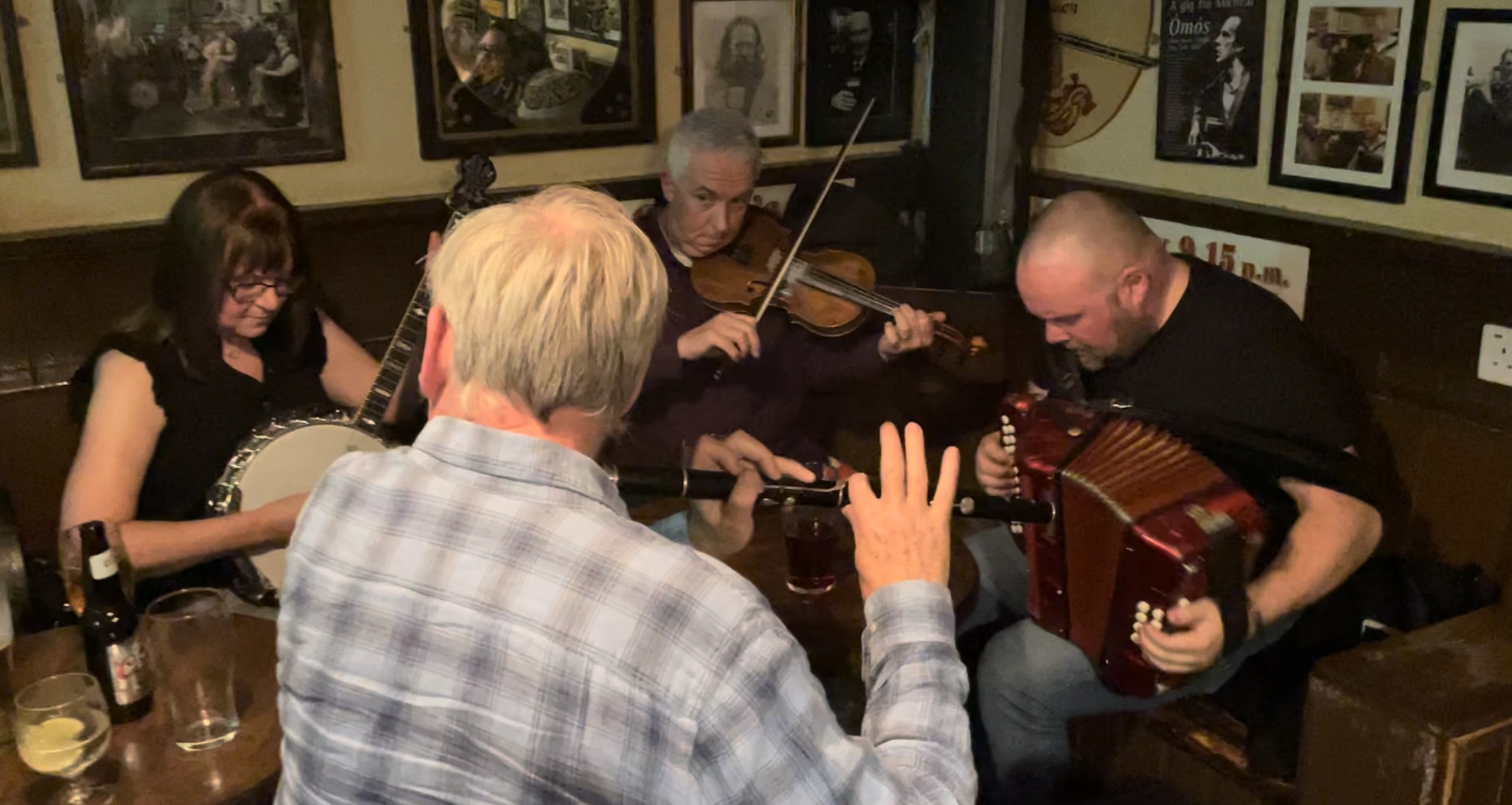
I am of the opinion that Ireland’s greatest export has not been Guinness or Waterford Crystal or Kerrygold Butter. It has been its culture. Whether it is the words of Yeats, Joyce, or Wilde, or the music of The Chieftains, Planxty, or U2, the poets and performers of Ireland are recognized and loved worldwide. The Irish can take great pride in their literary, dramatic, dance, and musical artists.
And they do. These storytellers are generally respected and appreciated in Irish society, more so I believe, than in countries like the United States where people tend to think of writers and musicians as unserious. In this first of four blogs, I will focus on the musical side of Irish culture.
Better Musical Breeding Ground
I have performed as a musician in both the US and Ireland. It seems that in Ireland there are more musicians who can make their way as professionals (per capita) than in the United States. Musicians in the US usually have to find additional work as they ply their trade. The government in Ireland has even recently implemented a basic income for 2,000 artists (musicians and other artists alike) so that they can specifically focus on their art. Statues and street names honor musicians from the harpist Turlough O’Carolan to Phil Lynott of Thin Lizzy. This admiration of musicians probably inspires more people to pursue a career in music. More participation creates a larger musical gene pool. The best of this group rises to the top, and there are so many!

Rich History
Every region has some folk music history. In Ireland, there were many sources of what can be called “Irish” music. The Irish Harp, or Celtic Harp, is one of the earliest known instruments associated with Irish music. It was mainly used an instrument for bards employed by nobility. Since it was not tied to rural music making, it became less popular in the 1700’s, but found a resurgence in the late 1800’s with a new design as part of the Gaelic Revival. Rural Irish music was played more often on the fiddle, the Irish flute, penny whistle, uilleann pipes and bodhrán. Other instruments from other cultures came later like the Irish bouzouki, guitar, mandolin and tenor banjo (four-, not five-string like the traditional bluegrass banjo). Sean-nós singing, an unaccompanied style of singing which highlighted narrative and emotion over melody, helped inspire the intricate and melismatic (multiple notes per syllable) style. All of these raw ingredients helped make the stew of Irish music styles.
The Diaspora
As occupation created conditions locally that made life unbearable for millions, the people of Ireland whether by choice or by force found opportunity elsewhere. England, America, Canada, Australia, and many other countries now hosted millions of Irish and their descendants created communities that reminded them of home with pubs, churches, and civic organizations. Live Irish music performance can be found in major cities across the world.. The genre also helped create new styles such as Old Time and Bluegrass music. Innovative musicians took a local folk music style played in homes and made it into a worldwide phenomenon.

The Evolution
Irish music has found resurgences in history as Ireland itself has tried to rediscover its past. In the late 1800’s and early 1900’s the popularity of the music style was part of a larger cultural movement that included works of literature and Irish sports like Gaelic football. Later in America, Francis “Chief” O’Neill, a police chief in Chicago, worked to publish the music creating eight volumes of over 3,500 tunes. In the 1960’s, Sean O’Riada established a traditional ensemble, Ceoltoiri Chulainn. He would mix traditional Irish music with classical arranging. His revolutionary approach helped inspire bands like The Chieftains. Irish music would now find much larger audiences. The Clancy Brothers, The Dubliners, and Planxty would take the music even further to audiences worldwide who were now warmly embracing the music of Ireland.

Today
Irish music lasts partly because it is still being made. Modern bands like Lankum, The Mary Wallopers, and Ye Vagabonds have helped add energy and innovation to traditional styles. Other artists have mixed the music with other genres like Enya (new age), Thin Lizzy and U2 (rock), and punk music (The Pogues, Flogging Molly, Dropkick Murphy’s). Starting from ancient styles and instrumentation, Ireland’s gift of music is a contribution to the world that will last for many generations to come.
At Rising Road Journeys, we celebrate and explore Ireland with tours that immerse you in Irish history, culture, and ecology. Find out about our latest tour, Discover Ancient Ireland.
Leave a Reply