
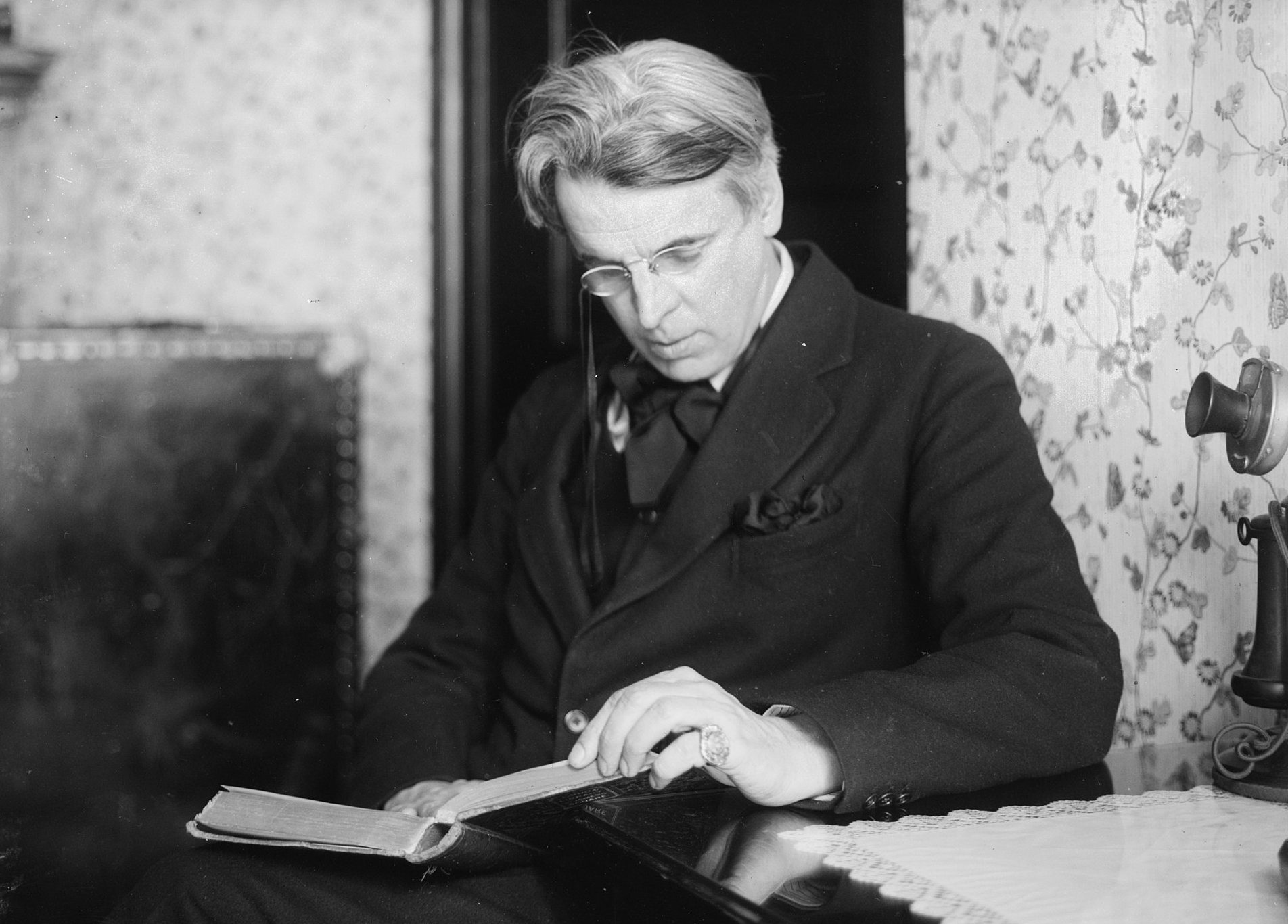
Back in 2019, I was in County Sligo. We were not far from Benbulbin, a mythical looking mountain famous for legends and the occasional appearance in W. B. Yeats’ poetry. Sligo is in fact Yeats Country. His family is from there and many parts of Sligo are featured in his works. I didn’t know, however, that he is also buried there. Our guide brought us to the cemetery where he lies overlooking his favorite mountain. Across the street, the ruins of an ancient monastic round tower keeps guard. As we approached his grave, we realized we were there on his birthday, June 13. We read Easter, 1916 over his grave and toasted the Nobel Poet Laureate. It was so inspiring to tie together the land, the myth, the history, and the poetry in one moment. Ireland has that power.

Irish authors, playwrights, and poets occupy a uniquely powerful place in English literature because they have consistently reshaped the language itself. Writing in English while often carrying the rhythms, idioms, and sensibilities of the Irish language, they infused English prose and poetry with new musicality and emotional depth. Writers like James Joyce revolutionized narrative form, demonstrating that English could stretch to capture the fluidity of human thought, while poets such as W. B. Yeats elevated its lyrical and symbolic potential. Their work did not merely contribute to English literature—it expanded its expressive possibilities.

The importance of Irish writers is also rooted in their engagement with identity, politics, and colonial history. Ireland’s complex relationship with Britain gave rise to literature that grapples with themes of displacement, resistance, and cultural survival. Playwrights like George Bernard Shaw, Oscar Wilde, and Sean O’Casey used drama to critique social norms and expose political tensions, often blending sharp wit with moral urgency. This ability to confront power structures while maintaining artistic brilliance has made Irish literature a vital lens through which global audiences explore questions of justice and national identity.
It is important to consider how the Irish were forced to speak English. As the famine took its toll, so did the Irish language. Although there has been a resurgence of interest in Ireland to reclaim the native language of Ireland, it must have had a profound impact on native speakers as they were forced to remake all of their myths and folklore into the colonizer’s language. The video above provides an excellent explanation to why this transition has made such an impact.

Equally significant is the Irish mastery of storytelling and oral tradition, which deeply informs their written works. Ireland’s rich heritage of myth, folklore, and spoken narrative translates into literature that feels vivid, intimate, and enduring. Writers such as Samuel Beckett transformed minimalism and existential themes into profound artistic statements, while still echoing the cadence of spoken language. This connection between oral and written traditions gives Irish literature a distinctive voice that resonates across cultures and generations.

Finally, Irish authors, playwrights, and poets have had an outsized global influence, shaping literary movements far beyond their relatively small nation. From modernism to absurdism, their innovations have inspired writers worldwide and redefined what literature can achieve. Their works are studied, performed, and celebrated internationally, proving that Irish literature is not confined by geography but speaks to universal human experience. In doing so, these writers have secured a lasting and essential role in the evolution of English literature.
This post is part of series. If you would like to see Part 1 about Irish musicians, go here.
At Rising Road Journeys, we celebrate and explore Ireland with tours that immerse you in Irish history, culture, and ecology. Find out about our latest tours.
Leave a Reply